Maybe It Was Never Too Much
September 11, 2026 · 4 min read
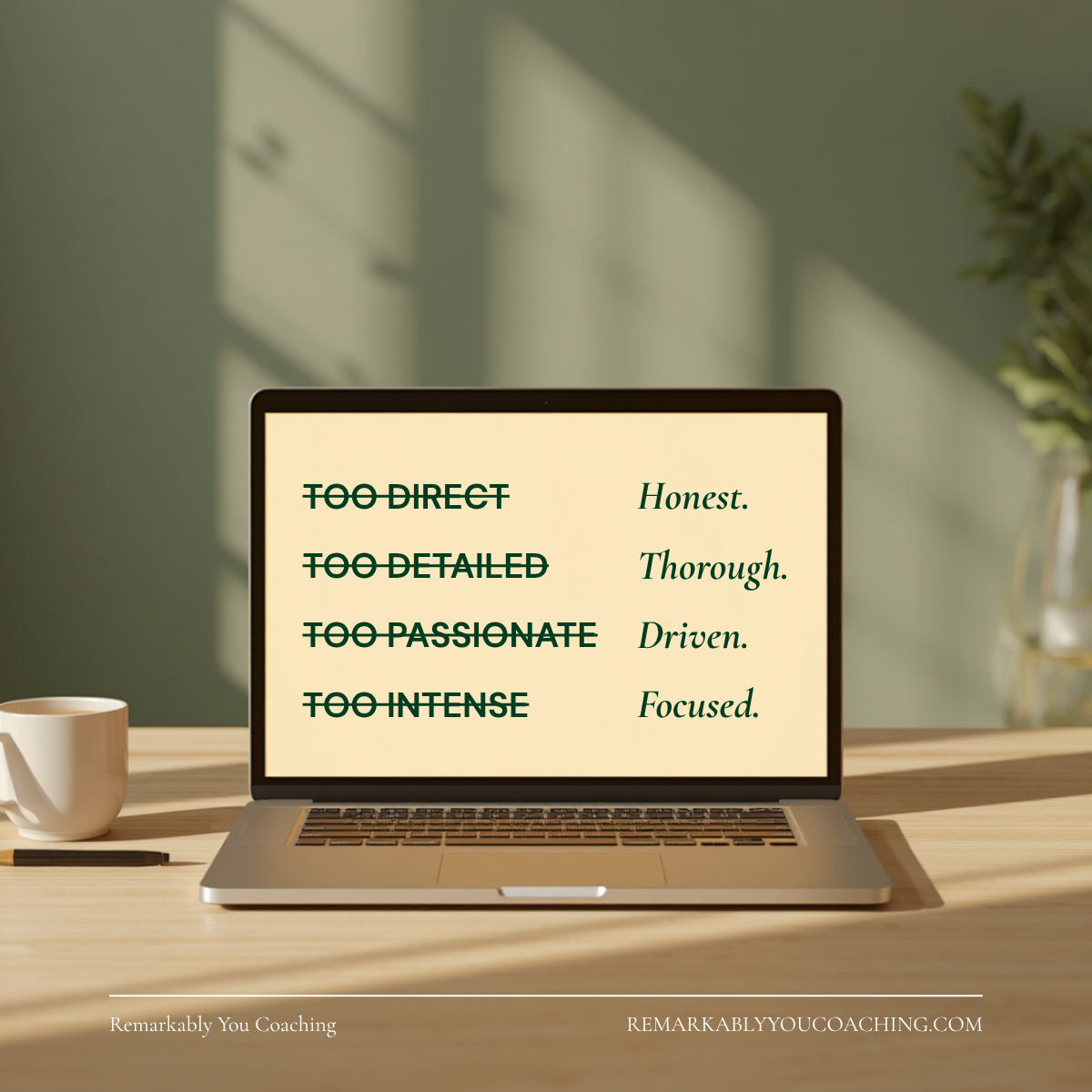
Have you ever wondered whether the qualities you've spent years trying to soften are the very qualities your organization needs most?
Too direct. Too detailed. Too passionate. Too intense. Too much.
If you've spent any significant time in corporate leadership, there's a good chance someone has used one of those phrases about you — or you've used them about yourself. Internalized them. Made them the reason you held back.
The Cost of Rounding Off the Edges
I've watched leaders spend years trying to become "easier to work with." Learning to dial it back. Round off the edges. Become easier for the room to digest. I've done it myself.
And for a while, it worked — in the sense that the feedback softened. Fewer people described you as difficult. You fit more smoothly into the spaces you needed to occupy. You got the job done without creating friction.
But something else happened too. The ideas you'd normally push for stayed unspoken a little longer. The questions you would have asked got swallowed. The clarity you could have brought got filtered — because you were too busy managing how you'd be received to fully show up.
The Leaders Who Made the Biggest Impact
Looking back across 35 years of leadership — and forward through the coaching work I do today — what I see consistently is this: the leaders who made the biggest impact were not the ones who successfully eliminated their intensity. They were the ones who stopped apologizing for how they think and started building around it.
The directness that made some people uncomfortable? In the right context, it was the thing that cut through ambiguity when everyone else was dancing around it. The detail orientation that felt excessive to some? It caught the flaw in a plan that would have cost the organization significantly. The passion that seemed like too much? It was what kept the team moving when everything else would have stalled.
What Operating Fully as Yourself Actually Looks Like
This is not a call to stop developing or to dismiss feedback entirely. Growth requires honest reflection, and some feedback is accurate and worth integrating. The question is not whether to grow. The question is what direction you grow in.
Are you developing the skills and strategies to lead more effectively as who you are? Or are you subtracting the things that make your leadership distinctive in hopes of becoming less threatening to the room?
The goal is not to be more. The goal is to operate more fully as yourself — and to build the self-awareness and skill to make that work in the environments where it matters.
The leaders who made the biggest impact were the ones who stopped apologizing for how they think — and started building around it.
Reflection: What quality have you spent the most energy managing or softening? What might become possible if you stopped seeing it as a problem — and started treating it as a tool?
Continue the conversation
If this resonates with you, I’d love to hear your story. The conversations that change us usually begin with someone finally feeling understood.
Book a Free Discovery Call →